Train-the-Trainer course
A course from the SciLifeLab Training Hub on teaching for lifelong learning.
Training CatalogueDefine learning outcomes, structure learning experiences, and get input from teaching frameworks to create effective training.
Our team presents best practices from educational research and practice, holds hands-on training for upskilling our community in teaching and mentoring, and participates in the international community working to develop lifelong learning in life sciences.
Training high school internship students in genomics technology will look different to training expert staff scientists, so it’s important to match the level of ideas, technology, or expertise you present with the level of pre-training understanding and background of your participants. The ideal is to design materials where participants can grasp the concepts and be challenged in implementing them.
Common target audiences at SciLifeLab are PhD students, postdocs, principal investigators, staff scientists, and research engineers. Some training in the SciLifeLab catalogue is designed for a general scientific audience, while other training is specific to PhD research schools or staff scientists in a platform.
Target audience is a required field when announcing training, and to aid in findability we recommend being clear about who the course is designed for.
In education, Learning Outcomes are a formalized, learner-centric way of communicating the purpose and expectations of training. Learning outcomes make use of Bloom’s taxonomy, a hierarchical framework of verbs arranged by cognitive complexity, as well as performance level descriptors and the knowledge, skills, or abilities that the participants will be learning.
The form of learning outcomes is structured as follows:
By the end of the time frame, participants will be able to Bloom’s taxonomy verb the knowledge, skill and/or ability at a performance level descriptor level.
As an example: By the end of the workshop, participants will be able to apply metabolomics analysis pipelines on their own research independently.
Learning outcomes are a required field when announcing training at SciLifeLab, and we encourage all instructors to follow this structure. For a detailed description of levels and descriptors on each part of the learning outcome structure, consult the Training Hub Learning Outcomes Guide, or the SciLifeLab Train-the-Trainer module on Learning Outcomes.
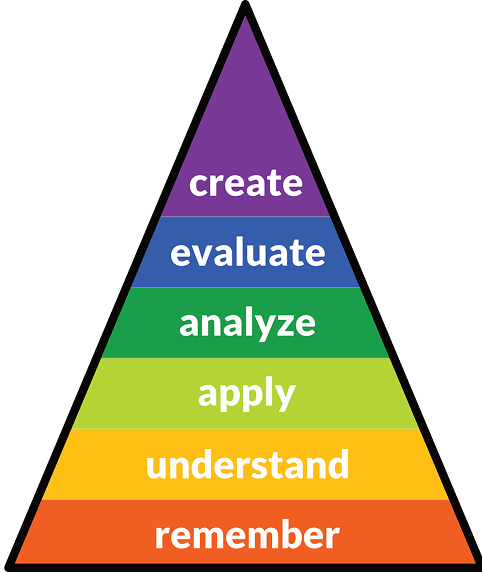
For inspiration on using Bloom’s taxonomy at SciLifeLab, see our resource on using technology to enhance learning:
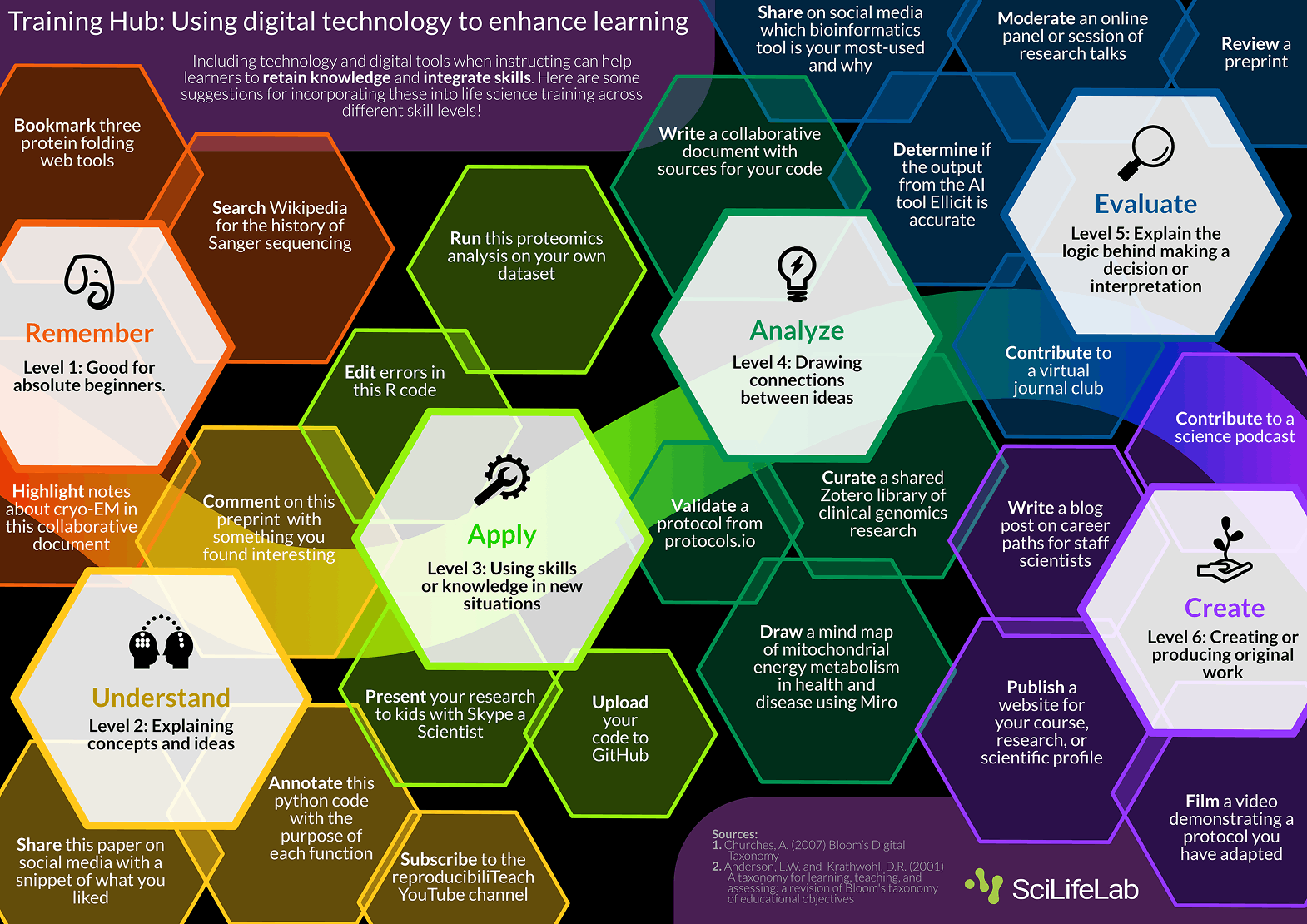
Researchers have limited time and ask for efficient, practical learning experiences that increase their knowledge, skills, and/or abilities. Engagement deepens learning and creates a more positive and enjoyable learning experience. Moving away from the traditional lecture and incorporating collaborative learning and engagement into learning experiences can help participants gain and retain what you are teaching.
The following video is a short introduction to designing and assessing learning outcomes and experiences using Python programming as an example.
A course from the SciLifeLab Training Hub on teaching for lifelong learning.
Training CatalogueA course from the SciLifeLab Training Hub on how learning in groups and teams occurs.
Training CatalogueTemplates and information on writing learning outcomes.
Resource CollectionA guide for designing courses targeted at advanced life science training.
Creation GuideTimelines, checklists and templates for structuring courses.
Resource CollectionPrinciples for designing effective short-format training for researchers and career scientists.
Training Framework